A Computer Animated Hand

Still from "A Computer Animated Hand" (1972) — Ed Catmull & Fred Parke, University of Utah
At the University of Utah, Ed Catmull drew 350 triangles in ink on a plaster cast of his left hand, digitized the coordinates, and wrote a program to animate it in three dimensions. It was one of the first 3D computer animations ever made. Four years later, the footage appeared in Futureworld (1976) — the first feature film to use 3D computer graphics.
The Graphics Group

Frames from the Genesis Effect sequence, Star Trek II: The Wrath of Khan (1982) — Lucasfilm Computer Division
George Lucas hires Catmull to lead a new Computer Division at Lucasfilm. Together with Alvy Ray Smith and a team of the brightest minds in graphics, they create the Genesis Effect for Star Trek II: The Wrath of Khan (1982) — the first fully computer-generated sequence in a feature film. A barren planet, terraformed in sixty seconds of fractals, particle systems, and pure mathematics.
The Exile
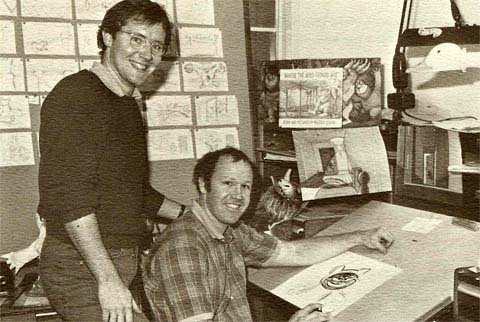
John Lasseter — from Disney animator to Lucasfilm's Computer Graphics Group. Photo: Computer History Museum
At Disney, a young animator named John Lasseter sees the future. He pitches The Brave Little Toaster with computer-generated backgrounds — a hybrid of traditional and digital animation. The executives reject the idea. Minutes after the meeting, he gets the call: his Disney career is over. But a computer graphics conference in Long Beach connects him with Ed Catmull, and Lasseter joins the Graphics Group at Lucasfilm.
The Road to Point Reyes

"The Road to Point Reyes" (July 1983) — Lucasfilm Computer Division. The first film-resolution rendered image. One month to render a single frame.
The Graphics Group renders a photorealistic landscape of Point Reyes, California. One frame. One month of rendering. Film-quality resolution for the first time. A one-frame movie that proved feature-length CG was theoretically possible. The rendering architecture behind it — REYES, "Renders Everything You Ever Saw" — would become the foundation of Pixar's RenderMan, the software behind nearly every visual effects film for the next three decades.
André and Wally B.

Still from "The Adventures of André & Wally B." (1984) — Lucasfilm Computer Graphics Project
Lasseter directs the first short at Lucasfilm's Graphics Group. A teardrop-shaped character named André wakes in a CG forest, confronted by a bumblebee. It debuts at SIGGRAPH to astonishment. The first CG animation with motion blur, and the first to prioritize character and personality over technical demonstration. The shift from "look what computers can do" to "look what stories we can tell."
Pixar

The original Pixar Animation Studios logo (1986) — pixel meets art.
Steve Jobs pays $10 million to buy the Graphics Group from Lucasfilm and names it Pixar — a word combining pixel and art, coined by Alvy Ray Smith. The name felt like a Spanish verb: to make pictures. Catmull becomes CTO, Lasseter becomes VP of creative. A hardware company on paper, an animation studio at heart.
Luxo Jr.

Still from "Luxo Jr." (1986) — Pixar's first short. First CGI film nominated for an Academy Award.
A parent and child desk lamp play with a rubber ball. Two minutes long. No dialogue. Pixar's first short under its new name debuts at SIGGRAPH to a standing ovation. It becomes the first CGI film ever nominated for an Academy Award. The baby lamp would become Pixar's mascot, bouncing on the letter I before every film. Character, warmth, and soul — from geometry and light.
Red's Dream

Still from "Red's Dream" (1987) — Pixar's most melancholic early short.
A unicycle named Red sits in the corner of a bike shop on a rainy night, dreaming of circus stardom. In the dream, the audience applauds. Then the applause fades back into the sound of rain, and Red is alone again. Complex lighting, real rain, emotional storytelling. Pixar's most melancholic work — four minutes of proof that computers could make you feel something.
Tin Toy

Still from "Tin Toy" (1988) — first CGI film to win an Academy Award for Best Animated Short.
A one-man band tin toy flees in terror from a drooling baby. Five minutes of slapstick, tenderness, and technical bravery. It debuts at SIGGRAPH to a standing ovation and goes on to win the Academy Award for Best Animated Short Film — the first CGI film to win an Oscar. The concept of toys with secret inner lives would simmer for seven more years.
Toy Story
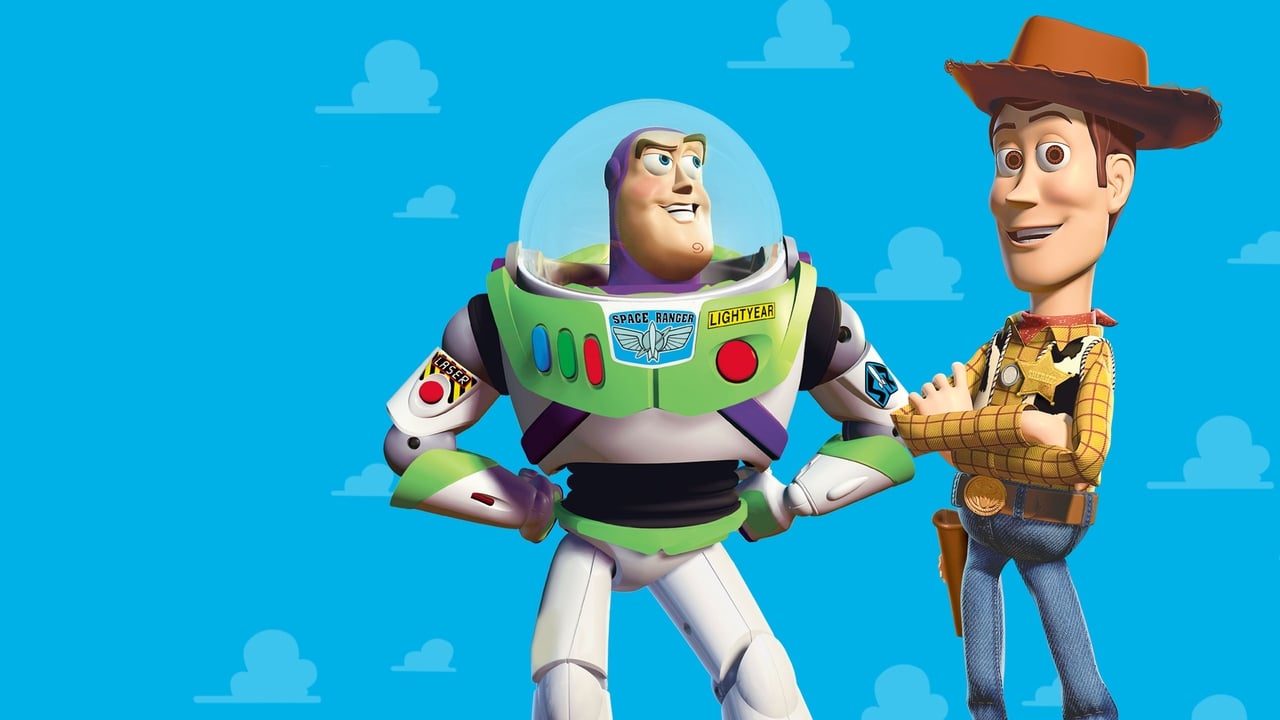
Toy Story (1995) — the first entirely computer-animated feature film in history.
The impossible becomes real. Eleven years after André and Wally B., Pixar releases the first entirely computer-animated feature film. 81 minutes of pure CG. A cowboy and a spaceman. 100% on Rotten Tomatoes, $363 million worldwide. The Pixar IPO one week later makes Steve Jobs a billionaire. The medium that Ed Catmull dreamed of in a university lab in 1972 has arrived.
Full Circle
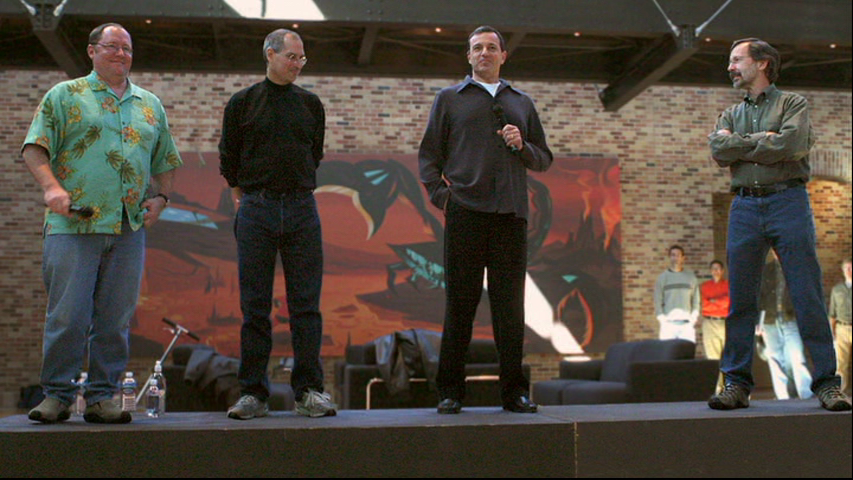
The Disney-Pixar acquisition announcement, 2006. The exile comes home.
Disney acquires Pixar for $7.4 billion. John Lasseter — fired from Disney twenty-three years earlier for believing that computers could tell stories — returns as Chief Creative Officer of Walt Disney Animation Studios. Ed Catmull becomes president of both studios. The man who was shown the door for dreaming too big now leads the kingdom. The exile comes home.